
Journal · No. 01
Why the best luxury brands rarely show the product
A baby carrier can cost four thousand dollars. Here is what Artipoppe builds around the price so that it never has to explain it.
There is a particular kind of arithmetic luxury brands live by: the object alone rarely justifies the price. Something else has to close the gap; heritage, scarcity, craft, desire. Artipoppe, a Dutch baby carrier brand whose pieces range from a few hundred dollars into the thousands, closes that gap almost entirely with story.

Start with the mission. Artipoppe does not talk about buckles or weight distribution. It talks about The New Motherhood — founder Anna van den Bogert's belief that a woman should not disappear into the role of mother, that she is allowed to keep her wildness, her identity, her own name. This is the first move every luxury brand makes: turn the object into an idea worth belonging to. The carrier becomes a vessel for something larger, and the value becomes the price of the idea, not the item.
The story is what makes the price feel earned.
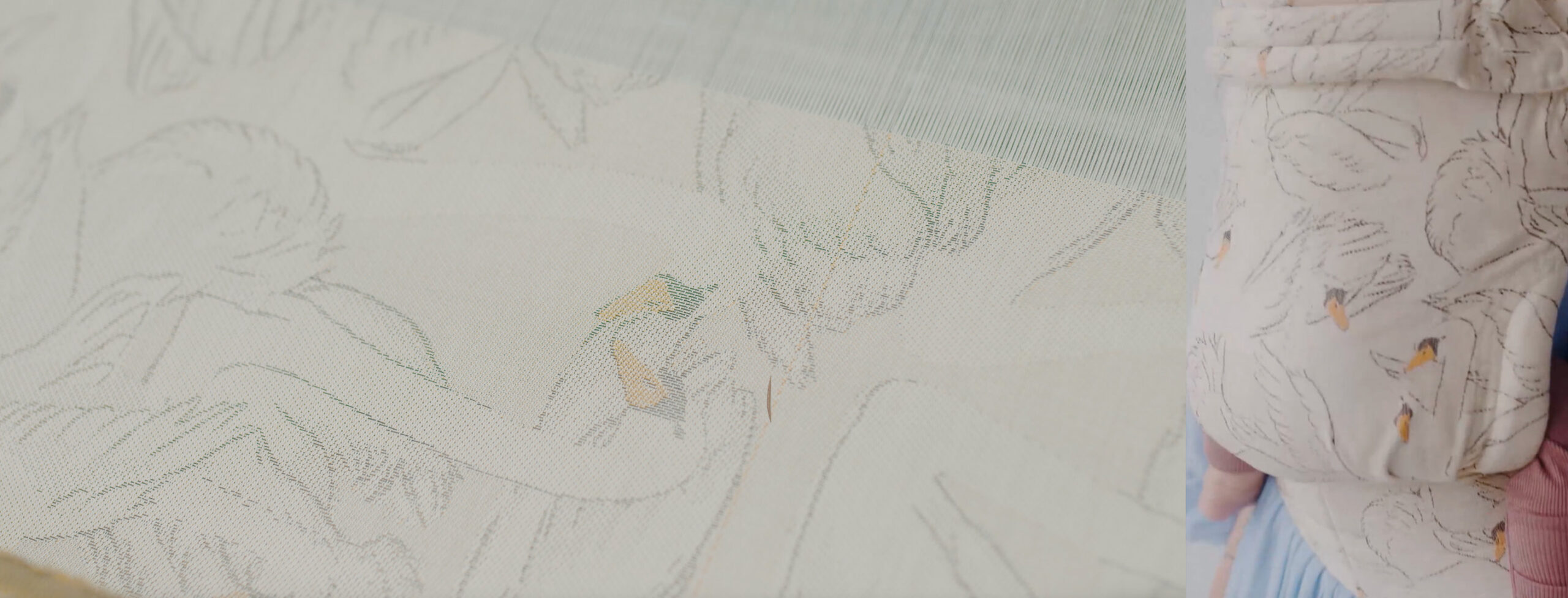
Then comes the material story, told the way couture houses tell it. Cashmere, silk, vicuña, hand-finishing, a box built to be kept. None of this is hidden, it is narrated, the way a fashion house narrates its ateliers. Luxury pricing survives scrutiny only when the craft behind it is made visible, slowly, in public.
The social feed does the rest of the work quietly. Many of what it shows is not the product at all, a mother nursing beneath a waterfall, a pregnant body between crates of lemons at a market stall, a woman alone on a rock, unposed. A feed that sells constantly reads as a catalogue. A feed that witnesses reads as a world, and a world is the thing people want to feel part of.
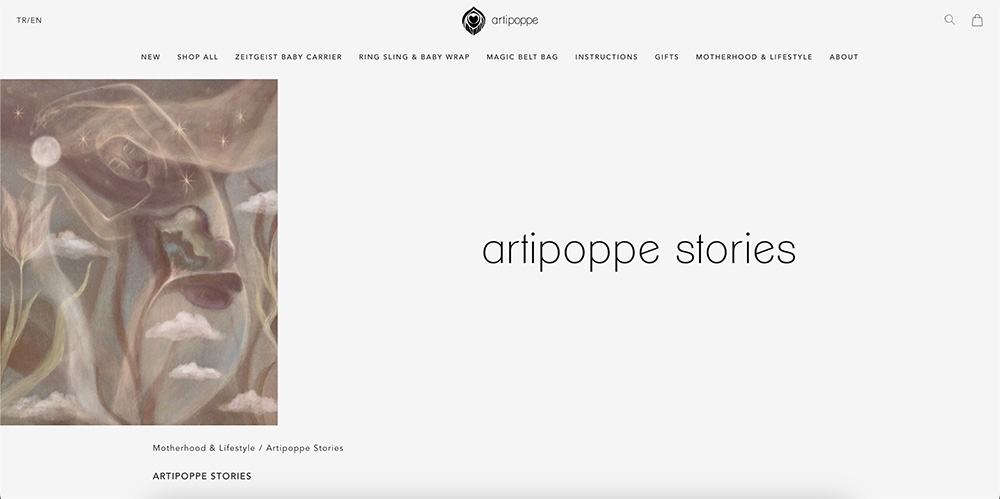
Once a month, Artipoppe Stories deepens that world further. Long conversations with an actress, a doula, a gardener, a poet, none of it mentioning the carrier. And artists are folded directly into the brand rather than hired to advertise it: Joséphine Klerks hand-paints the artwork for every Stories edition, Laxmi Hussain lent a signature piece to a collection called Archives of Love, Jane Goodall co-designed a carrier with proceeds funding her institute. This is what separates luxury collaboration from an influencer placement, the artist's own cultural weight is borrowed by the brand, and lent back to it.
And then, quietly, the market confirms it. A resale economy has grown up around these carriers; Poshmark, eBay, Facebook groups, where a piece can be sold on for close to what it cost. Cheaper "dupe" versions circulate too, entire blog posts dedicated to finding one. Both are, in their own way, proof: nothing is imitated or resold at value unless it has become an object of genuine desire, not just utility.
What this teaches a luxury brand
The mission absorbs the price. An idea worth belonging to makes a number feel earned rather than steep.
Narrate the craft, don't just claim it. Materials and process, told slowly and in public, are what let a price survive scrutiny.
Let the product shows quietly. A world people want to be part of sells harder than a feed that only sells.
Borrow cultural weight, don't rent reach. Artists and collaborators chosen for shared worldview lend the brand meaning; influencers chosen for audience only lend it visibility.
Resale and imitation are signals, not threats. A healthy secondhand market and a wave of dupes both confirm the same thing: desire beyond utility.
This is the real discipline of the modern premium: the object is never asked to justify itself alone. It is surrounded, by mission, by craft, by art, by proof of desire until the price is simply the cost of stepping into the world the brand has built.